Launch offer — valid today only

📄 Digital book in PDF · read it on your phone or print it

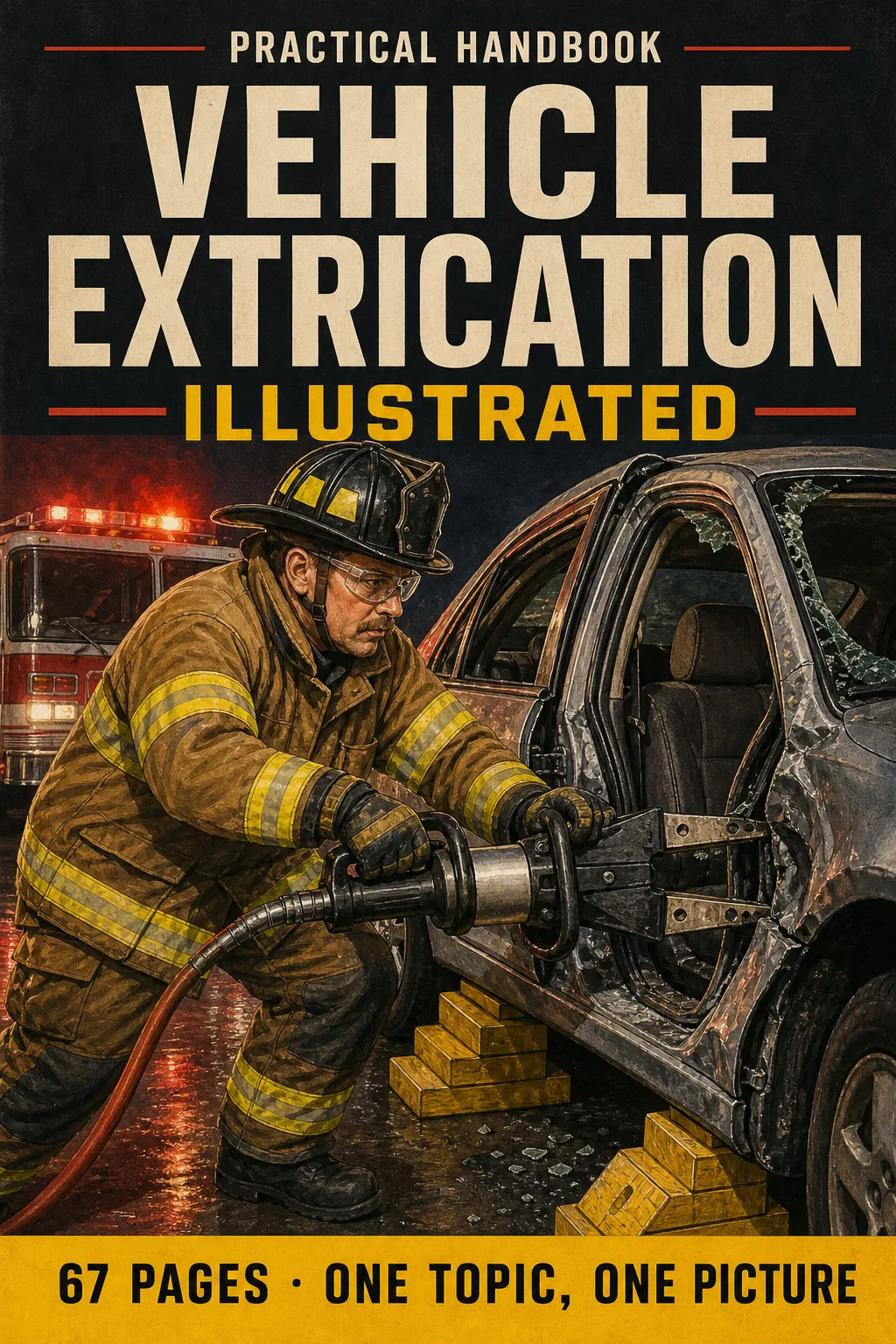
Vehicle Rescue Certification, Illustrated: Every Extrication in the Same Six Steps One Evolution on Every Page

Size-up, airbags and inflators, hybrids and EVs, cribbing, hydraulic tools, glass, door and roof evolutions, the dash roll and patient removal. Every topic gets its own page: the drawing first, then what you need to remember. 67 illustrated pages.

GET THE ILLUSTRATED BOOK

🔒 Secure checkout · PDF by email · 30-day guarantee

Every topic, its own pageEach evolution drawn, with the explanation right beside it
67 illustrated pages67 illustrated pages in 9 parts, ending with your night-before checklist
Up-to-date sourcesBased on NFPA 1006 and NFPA 2500 requirements and state VMR skill sheets
PDF by emailFormat

Look Inside the Book

Every page has one big drawing and a box with the steps and numbers you need to know:

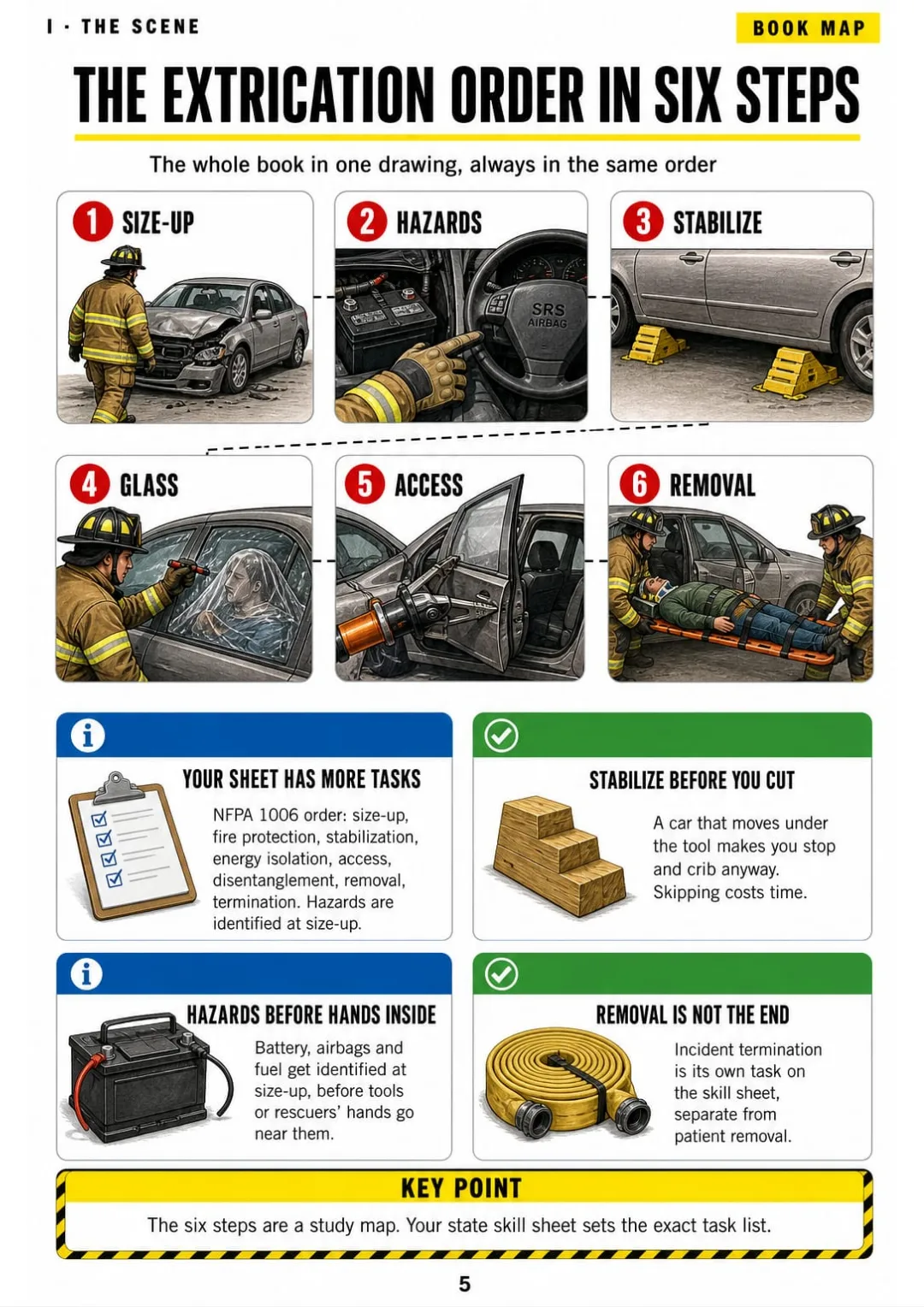
Size-up → hazards → stabilize → glass → access → removal: the study map behind your skill sheet.
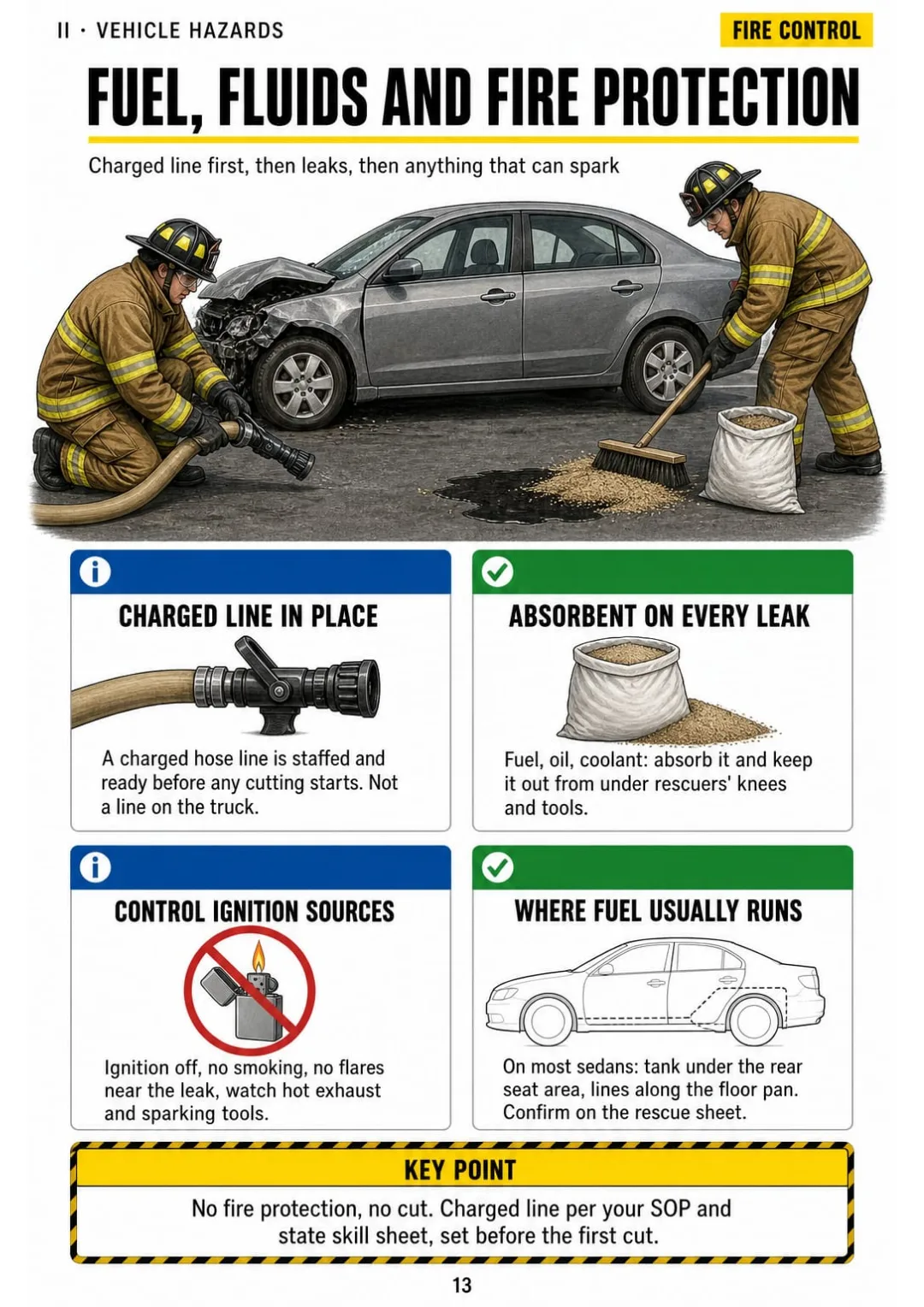
Charged hose line ready before cutting, absorbent on leaks and where fuel runs on a sedan.
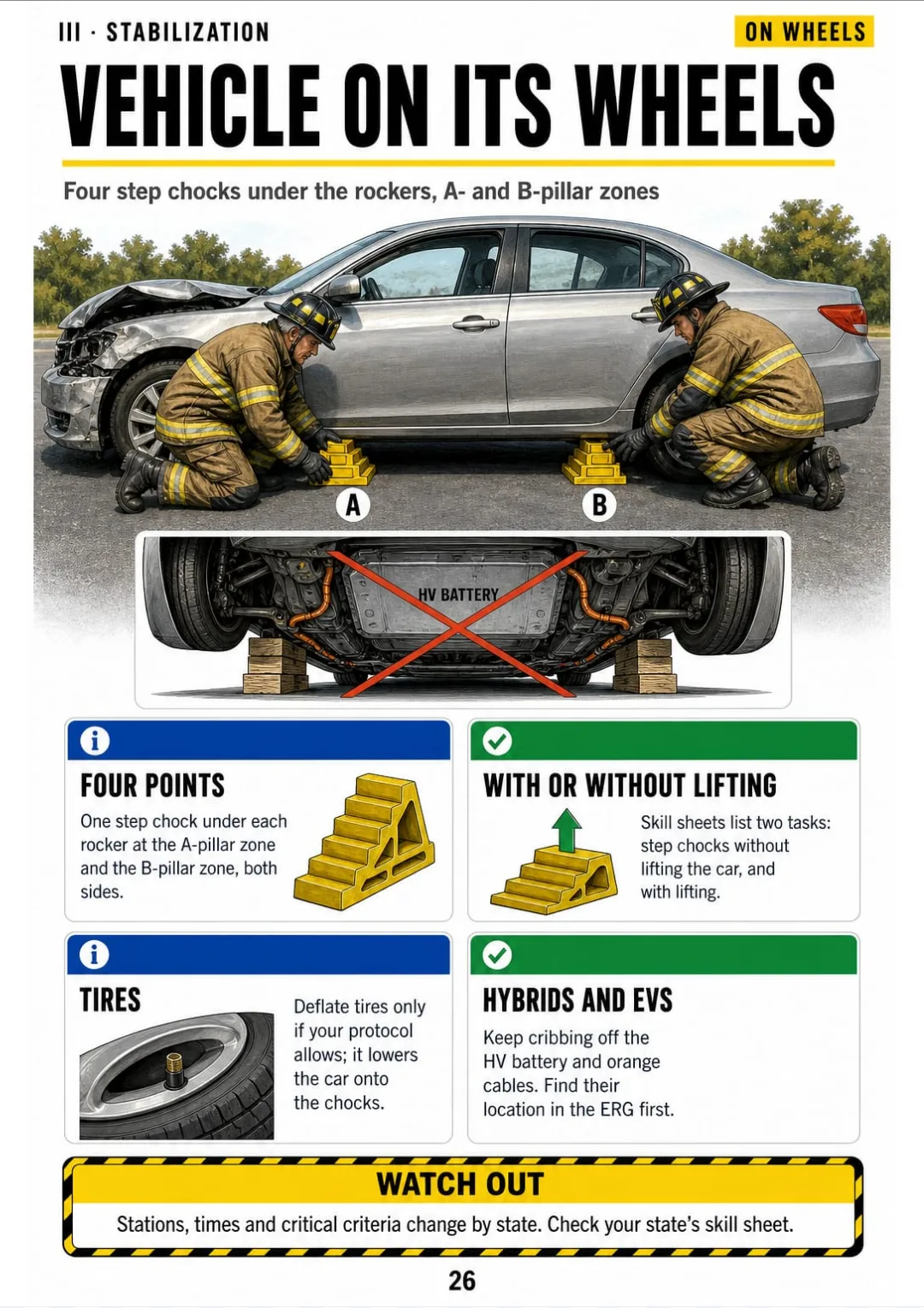
Step chocks at the A- and B-pillar zones; keep clear of the HV battery.
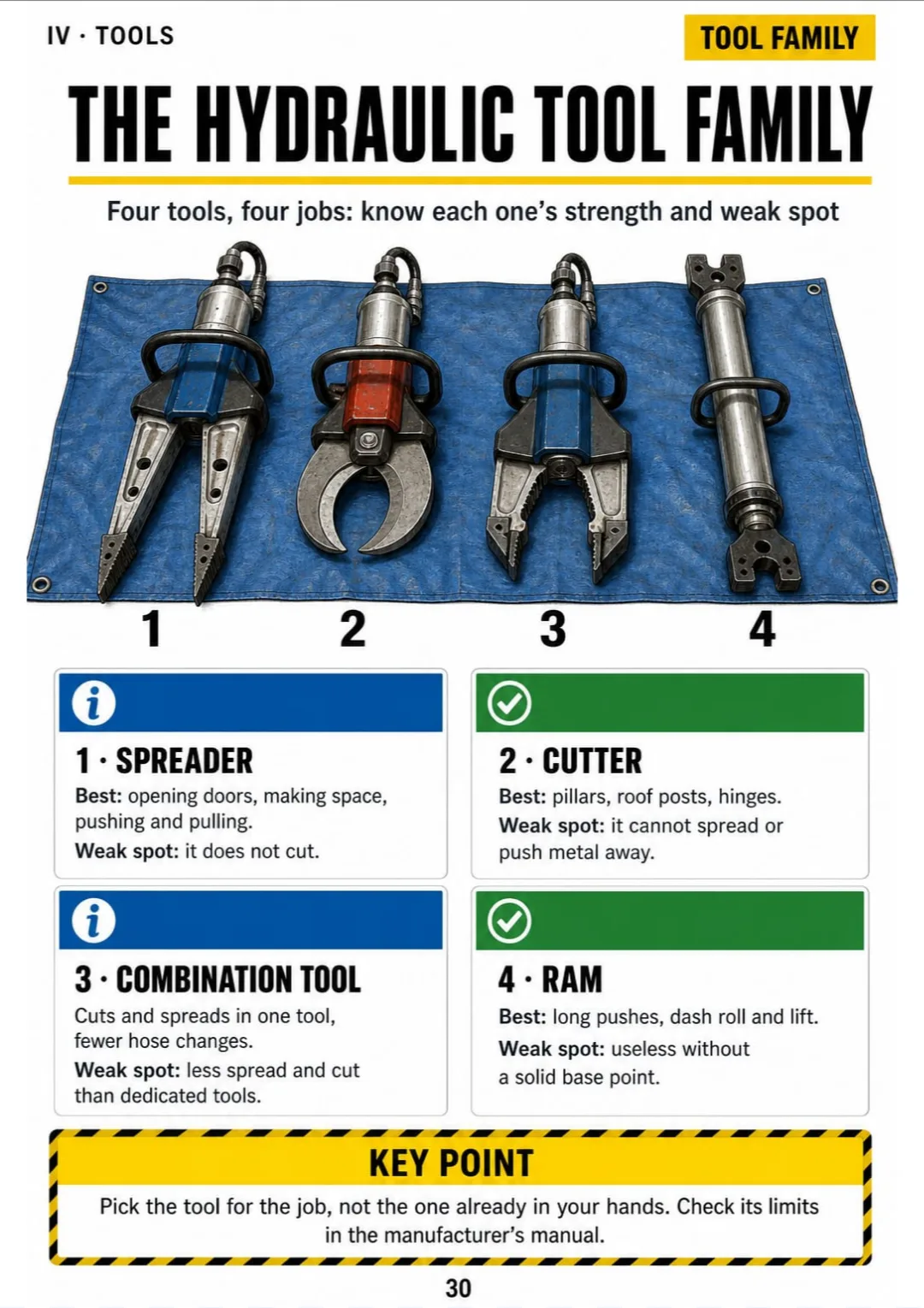
Four hydraulic tools on one page, each with its best job and its weak spot.
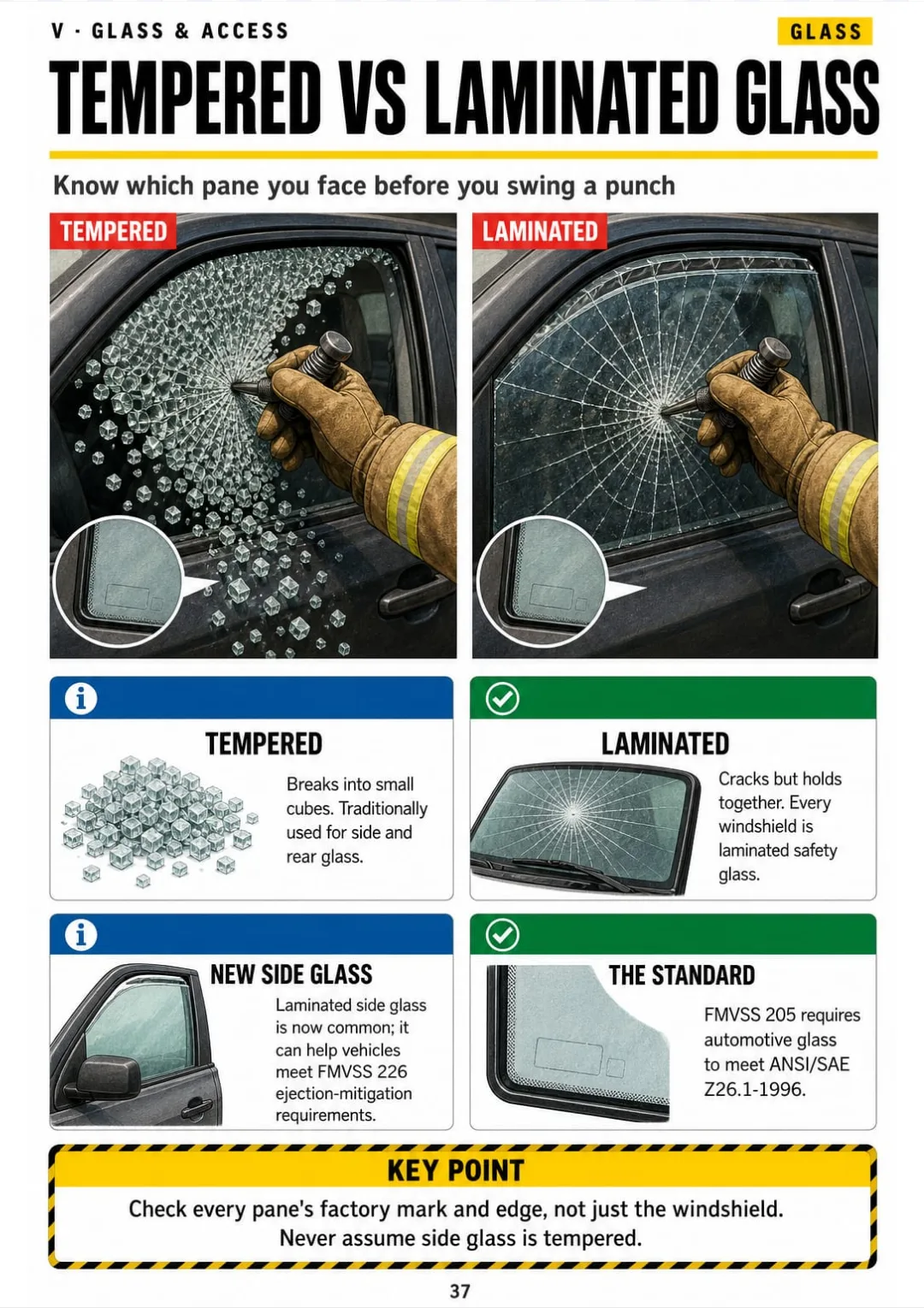
Windshields are laminated; side glass may be too—check every pane's factory mark.
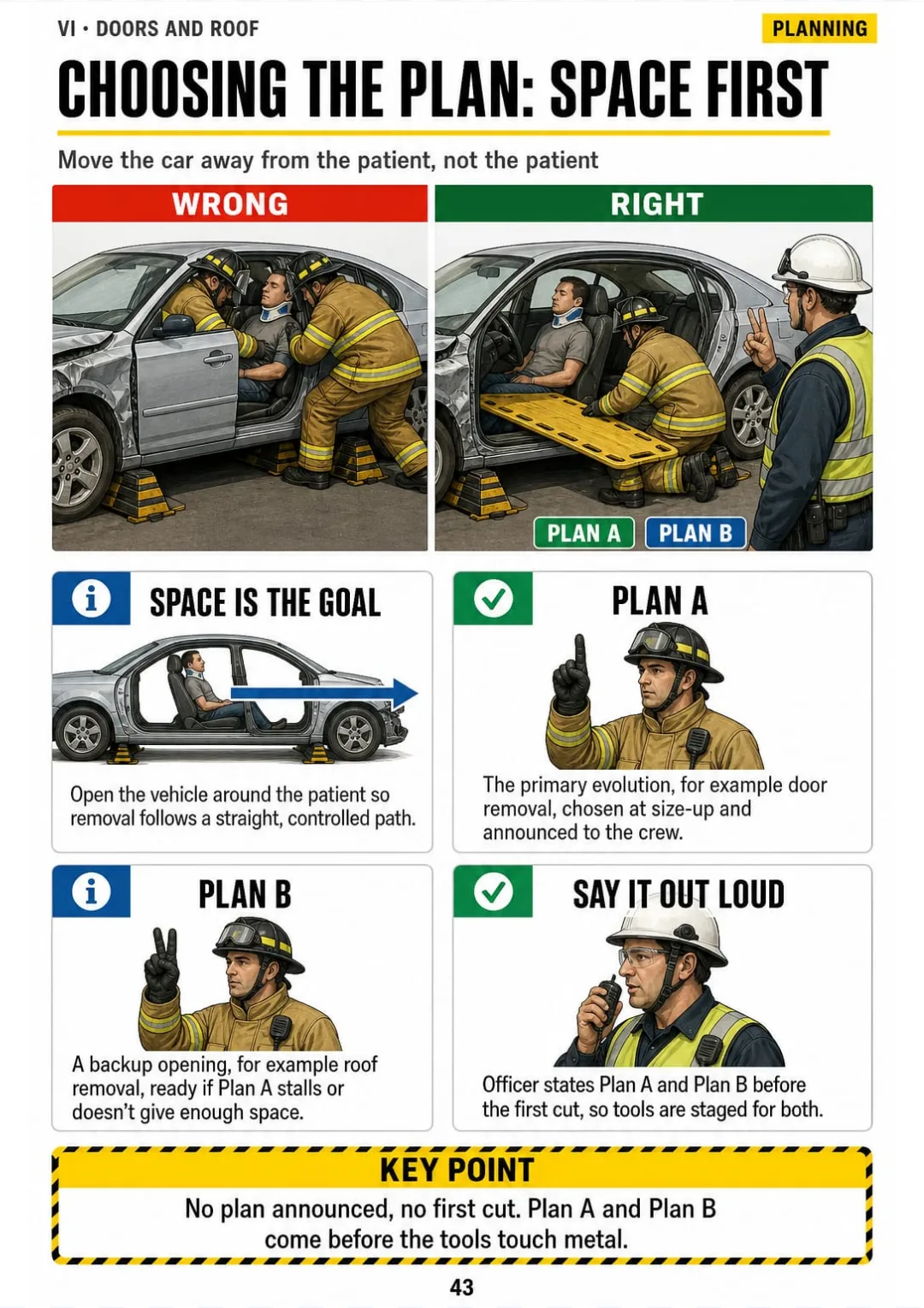
Plan A and Plan B announced before the first cut: open the car, not the patient.
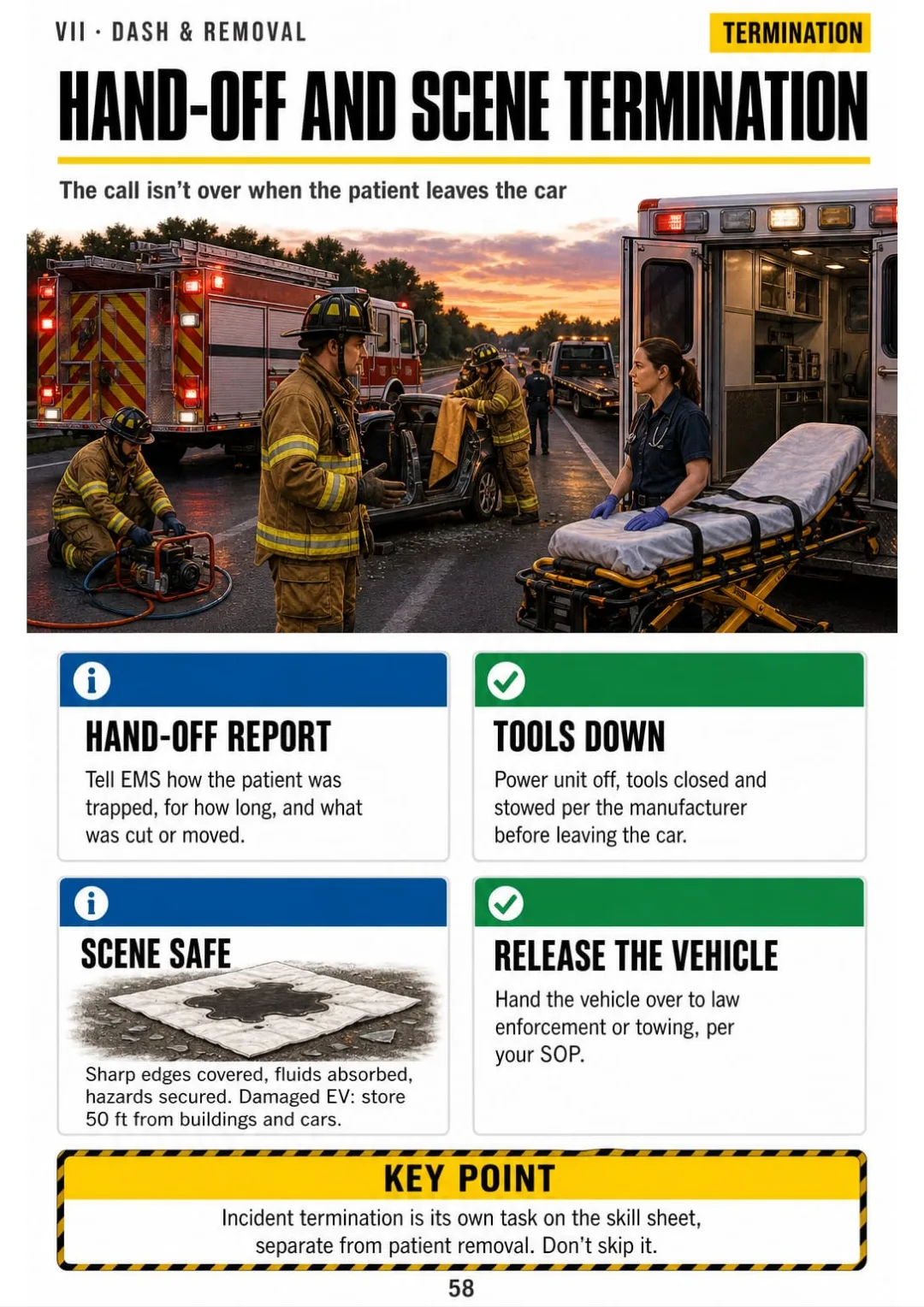
Hand-off report, tools off, edges covered, vehicle released
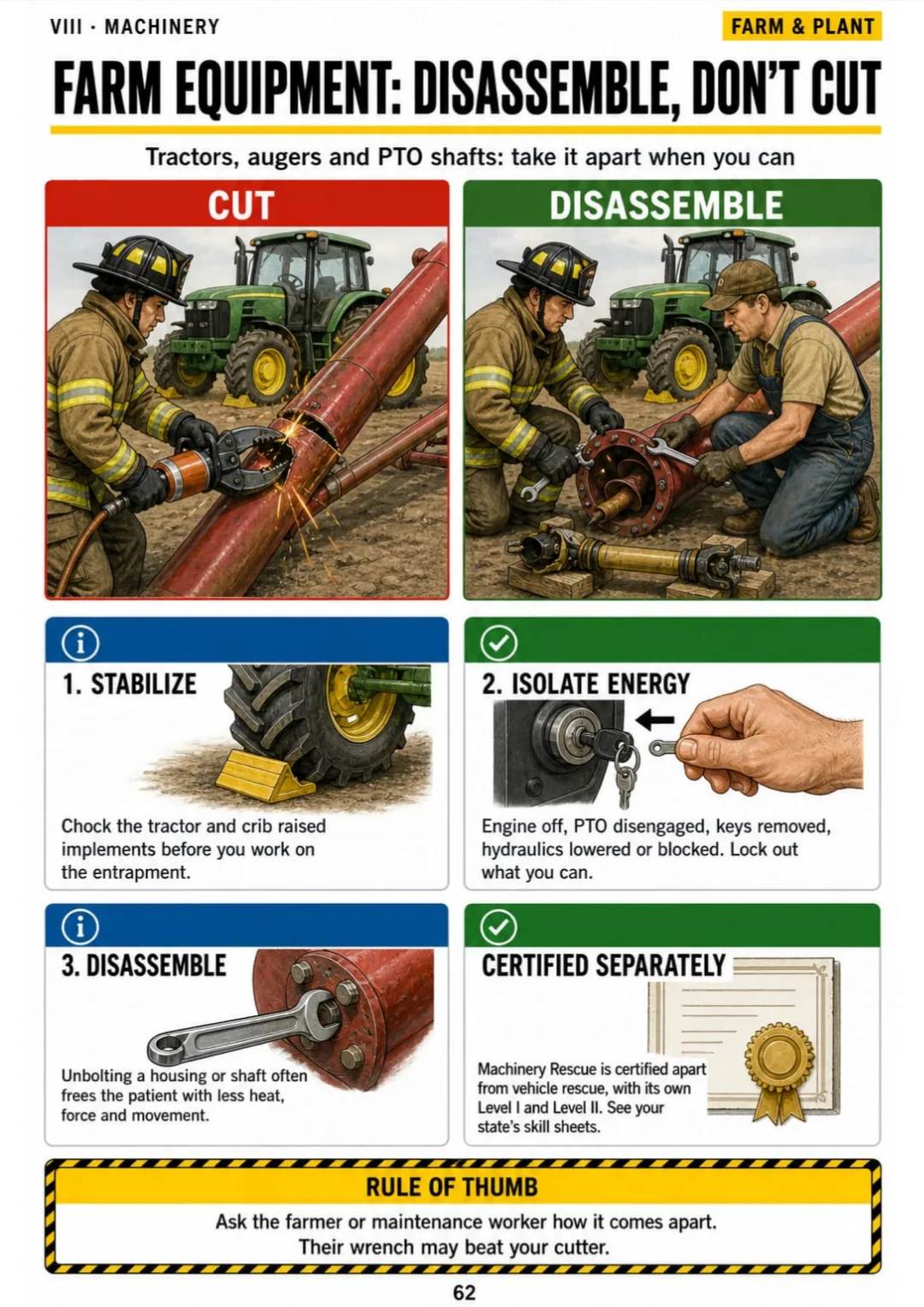
Stabilize, isolate energy, then disassemble before you cut: tractors, augers, PTO shafts.

Swipe to see more →

These are real pages from the book. The table of contents is the full one: 9 parts and 63 topics.

The Problem Isn't You. It's How It Was Explained to You.

You're kneeling next to a sedan on its wheels after a T-bone, cribbing in your hands. Your captain asks: which movements have you stopped, and which ones are still loose?

You read it in the manual. Paragraphs on horizontal, vertical and rotational movement, written like a contract. You read them after a 24-hour shift, and by morning the words were gone.

Step chocks at the A- and B-pillar zones; keep clear of the HV battery.

In this book, stabilization is one page: the car drawn in the middle, six arrows for forward-back, side to side, up-down, roll, pitch and yaw, and what stops each one before anyone goes inside.

The rest works the same way. The inner and outer circle survey, stand-off distances from undeployed airbags, box cribbing, the car on its roof, the dash roll relief cut: each one has its own page.

You see the page and you know the move. On the drill ground you set up your stabilization without going back to the manual.

COMPARE FOR YOURSELF

Same Topic, Two Ways to Study It

THIS
  • The manual: line after line of text
  • Fire protection and leak control explained only in words
  • You show up to the exam still unsure
Prior to the initiation of any extrication operation, personnel shall ensure that adequate fire protection has been established in accordance with departmental standard operating procedures. A charged hose line of appropriate diameter should be deployed and staffed in a position that permits rapid application to the vehicle and its occupants. Fluid leaks, including but not limited to gasoline, diesel, coolant, transmission fluid and brake fluid, shall be identified, contained and controlled through the application of absorbent materials, with consideration given to the location of the fuel tank, fuel lines and potential ignition sources.
FOR THIS
  • The charged line and the leak in one drawing
  • The steps in a box
  • You see it and you get it
Charged hose line ready before cutting, absorbent on leaks and where fuel runs on a sedan.
CONTENTS

Take a Look at the 9 Parts and 63 Topics

The scene, hazards inside the vehicle, stabilization, tools, glass and access, door and roof evolutions, dash and patient removal, heavy vehicles and machinery, and a final review: 67 pages, all illustrated.

IThe Scene Before the Car · pp. 5-12
  1. The Extrication Order: Six Steps, Every Time
  2. Level I vs Level II: What Each One Must Do
  3. Dispatch to Arrival: What You Already Know
  4. Apparatus Blocking and the Safe Work Zone
  5. Inner Circle and Outer Circle Survey
  6. Size-Up Report: Say It in One Breath
  7. Hot, Warm and Cold Zones at a Crash
  8. PPE for Extrication
IIHazards Inside the Vehicle · pp. 13-21
  1. Fuel, Fluids and Fire Protection
  2. 12-Volt Battery: Find It Before You Cut It
  3. Airbags: Frontal, Side, Curtain, Knee
  4. Stand-Off Distances from Undeployed Bags
  5. Inflators, Pretensioners and Gas Struts
  6. Hybrid Vehicles: Spot Them, Shut Them Down
  7. Electric Vehicles: Battery Pack and Thermal Runaway
  8. Advanced Steel: Boron and Ultra-High-Strength
  9. Emergency Response Guides and Rescue Sheets
IIIStabilization · pp. 22-29
  1. The Goal: Turn the Car into Part of the Ground
  2. Quick Wins: Chock, Park, Ignition Off
  3. Cribbing: Sizes, Wood and Plastic
  4. Box Cribbing the Right Way
  5. Vehicle on Its Wheels
  6. Vehicle on Its Side
  7. Vehicle on Its Roof
  8. Struts, Ratchet Straps and Lifting Bags
IVTools · pp. 30-36
  1. Hydraulic Tool Family at a Glance
  2. Power Units, Hoses and Battery Tools
  3. Spreader: Push, Pull, Pinch, Crush
  4. Cutter: Angle, Depth and the Throat
  5. Rams: Push Distance and Purchase Points
  6. Hand Tools and Hand-Powered Options
  7. Tool Staging Area and Tool Safety
VGlass and Patient Access · pp. 37-42
  1. Tempered vs Laminated Glass
  2. Glass Management Before Breaking
  3. Windshield Removal
  4. Rear and Sunroof Glass
  5. Gaining Access: Try Before You Pry
  6. Interior Rescuer and Hard Protection
VIDoor and Roof Evolutions · pp. 43-51
  1. Choosing the Plan: Space Is the Goal
  2. Vertical Crush to Make a Purchase Point
  3. Door Removal from the Latch Side
  4. Door Removal from the Hinge Side
  5. Side Removal and the B-Pillar Rip
  6. Third Door Conversion on Two-Door Cars
  7. Full Roof Removal
  8. Roof Flap Forward and Back
  9. Side-Resting Vehicle: Roof as a Door
VIIDash, Pedals and Patient Removal · pp. 52-58
  1. Dash Roll: Relief Cuts and Ram Placement
  2. Dash Lift and Jacking the Dash
  3. Pedal Displacement
  4. Seat Displacement
  5. Packaging: Controlled vs Rapid Removal
  6. Removal Path and Rescuer Positions
  7. Hand-Off to EMS and Scene Termination
VIIIHeavy Vehicles and Machinery · pp. 59-62
  1. Commercial Vehicles: What Changes
  2. Buses and Large Passenger Vehicles
  3. Machinery Entrapment Basics
  4. Agricultural and Industrial Equipment
IXReview Before the Exam and the Scene · pp. 63-67
  1. The Whole Evolution on One Page
  2. Most Common Mistakes on the Skills Sheet
  3. Hybrid and EV Quick Check
  4. Numbers and Terms to Know
  5. Your Night-Before Checklist

One Page, One Topic, All Clear

Think of it this way:

It's training night, there's a car on its roof, and the lieutenant points at you: Plan A and Plan B, out loud, before the first cut.

In the book you open the page on choosing the plan and see it drawn: space first, open the car, not the patient, with Plan A and Plan B side by side.

Windshields are laminated; side glass may be too—check every pane's factory mark.

Tempered vs laminated glass, the hydraulic tool family, the dash roll relief cut, the vehicle on its side, the air brakes and saddle tanks on a truck: same thing, each one on its own page.

Vehicle Extrication Illustrated is 9 parts and 63 topics, all drawn, and it ends with a review: the whole evolution on one page, the most common skill sheet mistakes and a night-before checklist.

What you see drawn, you don't have to memorize.

What's Inside Vehicle Extrication Illustrated:

Ipp. 5-12

The Scene Before the Car

The six-step extrication order, Level I vs Level II, apparatus blocking, the inner and outer circle survey, the size-up report, scene zones and PPE.

IIpp. 13-21

Hazards Inside the Vehicle

Fuel and fluids, the 12-volt battery, airbags and stand-off distances, inflators and pretensioners, hybrids, EVs, boron steel and emergency response guides.

IIIpp. 22-29

Stabilization

The goal of stabilization, quick wins, cribbing sizes, box cribbing, the car on its wheels, side and roof, and struts, straps and lifting bags.

IVpp. 30-36

Tools

The hydraulic tool family, power units and battery tools, spreader, cutter, rams, hand tools and tool staging.

Vpp. 37-42

Glass and Patient Access

Tempered vs laminated glass, glass management, windshield, rear and sunroof glass, try before you pry and the interior rescuer.

VIpp. 43-51

Door and Roof Evolutions

Choosing the plan, vertical crush, door removal from latch and hinge side, side removal, third door, full roof removal, roof flap and the roof as a door.

VIIpp. 52-58

Dash, Pedals and Patient Removal

The dash roll, dash lift, pedal and seat displacement, packaging, the removal path and the hand-off to EMS.

VIIIpp. 59-62

Heavy Vehicles and Machinery

What changes with commercial vehicles and buses, machinery entrapment and agricultural and industrial equipment.

IXpp. 63-67

Review Before the Exam and the Scene

The whole evolution on one page, the most common skill sheet mistakes, the hybrid and EV quick check, the numbers and terms and your night-before checklist.

At the end of the book: A final review part: the whole evolution on one page, the most common skill sheet mistakes, a hybrid and EV quick check and the numbers and terms to know.
Plus: 2 Free Books

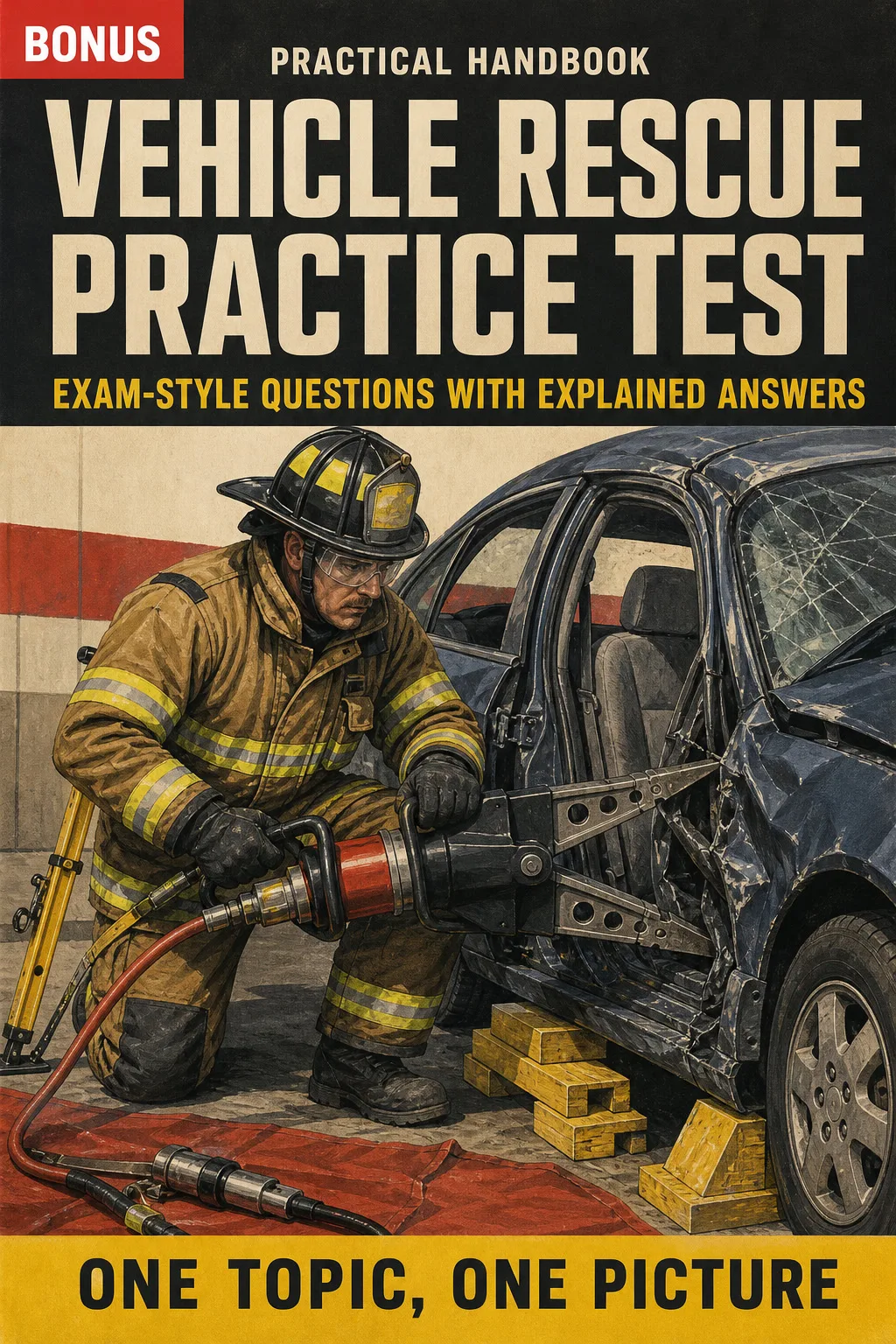
Vehicle Rescue Practice Test: Exam-Style Questions with Explained Answers

BONUS 1: «Vehicle Rescue Practice Test: Exam-Style Questions with Explained Answers»

Value on its own: US$ 17.90

Test yourself on size-up, stabilization, tools and cuts the way the written exam asks, and see in one line why each answer is right.

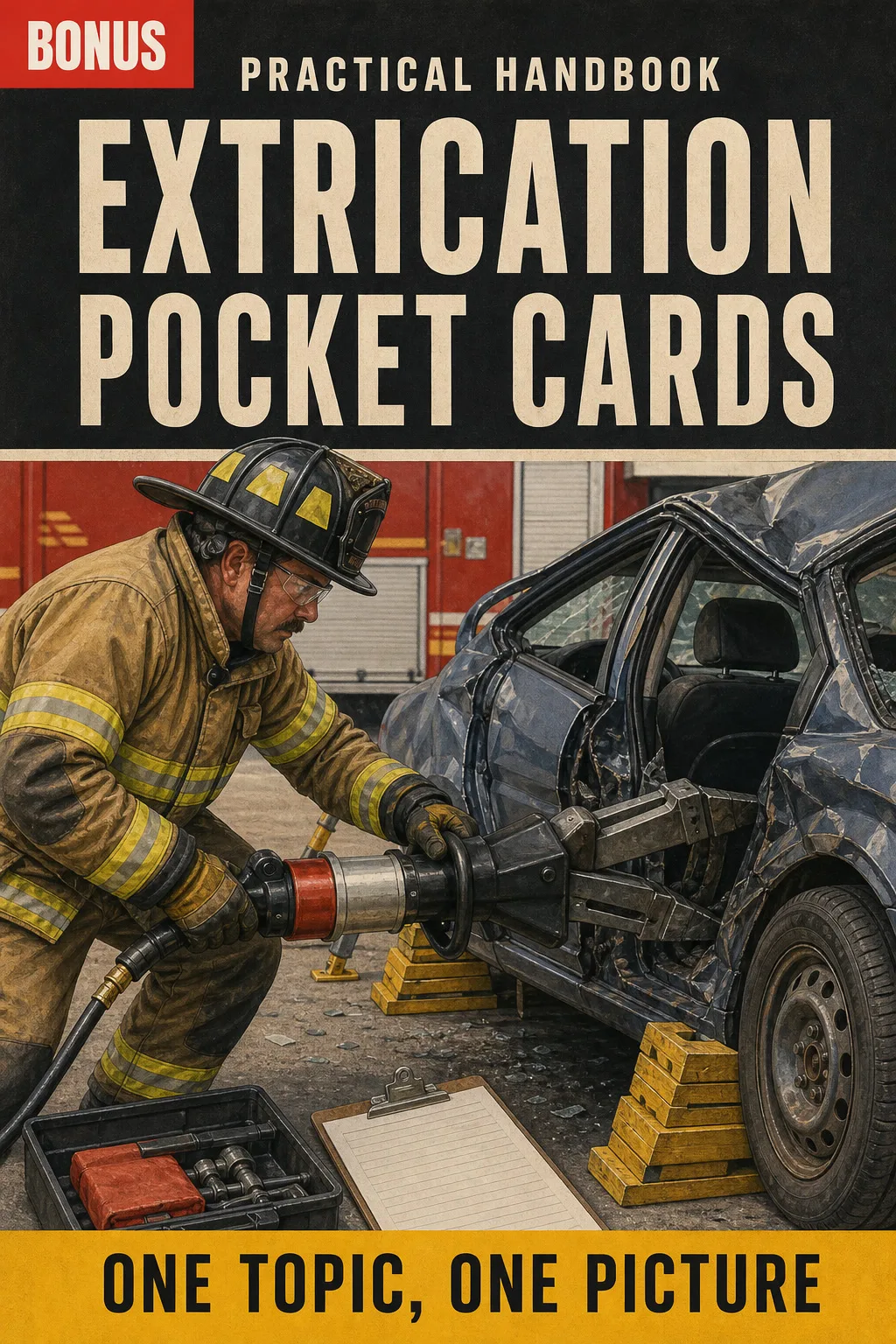
Extrication Pocket Cards

BONUS 2: «Extrication Pocket Cards»

Value on its own: US$ 14.90

Every evolution on a single card, in the same order as the book, to review between shifts or keep printed on the rig.

Vehicle Extrication Illustrated with 2 Free Books

  • Vehicle Extrication Illustrated: 67 illustrated pagesUS$ 63
  • BONUS 1: Vehicle Rescue Practice Test: Exam-Style Questions with Explained AnswersUS$ 17.90
  • BONUS 2: Extrication Pocket CardsUS$ 14.90
  • High-resolution PDF to printIncluded
Total value US$ 95.80
YOUR PRICE:
US$ 27
You save US$ 68.80
YES, I WANT VEHICLE EXTRICATION ILLUSTRATED FOR US$ 27

📄 This is a digital PDF book sent to your email: nothing is printed or shipped.

Secure purchaseEncrypted payment30-day guarantee

PDF by email: We email you Vehicle Extrication Illustrated as a PDF, together with the two free books. It's a single payment: no installments, no extra charges.

Who This Book Is For

You're taking the vehicle rescue course

You're taking the vehicle rescue course

Each class topic has its own page, in the same order you'll work a scene. You review it between shifts in a few minutes.

Your certification exam is coming up

Your certification exam is coming up

Stabilization, glass, tools and cuts in the order the written test and the skill sheets ask for them, plus a practice test with every answer explained.

You've been certified for years

You've been certified for years

An update on the cars you cut today: advanced steel, curtain airbags, hybrids and EVs. And a page you can put in front of your crew on training night.

Everything You Get Today

US$ 95.80US$ 27
YES, I WANT VEHICLE EXTRICATION ILLUSTRATED FOR US$ 27

📄 This is a digital PDF book sent to your email: nothing is printed or shipped.

30DAYS
GUARANTEE

30-Day Guarantee

Try Vehicle Extrication Illustrated for 30 days, bonus books included.

We refund everything if the file won't open, if the book isn't what you see here, if you were charged twice or if the email doesn't arrive. Just email us.

You pay once. No subscriptions.

Frequently Asked Questions

Is it for me if I already run extrication calls but my certification exam is coming up?

Yes. It's for firefighters preparing for Vehicle and Machinery Rescue at Operations or Technician level, and for anyone certified years ago who wants to catch up on today's cars. It doesn't replace your course manual: it takes each topic and puts it on one drawn page, in the order you work a scene, so you can review it in a few minutes after shift. It assumes you know the job.

Where does the content come from?

From the vehicle and machinery rescue requirements in NFPA 1006 (Level I and Level II) and NFPA 2500, and from the skill sheets state fire training agencies use. State VMR certifications accredited by IFSAC or the Pro Board are built on NFPA 1006, so the topics match; if your state's skill sheet words or orders a step differently, follow your state's sheet. Today's cars have their own pages: boron steel, curtain airbags, inflators and pretensioners, hybrids and EVs, always pointing you to the manufacturer's emergency response guide.

Is this official material?

No. It's independent study material, not affiliated with or endorsed by NFPA, IFSAC, the Pro Board or any state agency, and it doesn't give you a certificate or CE hours. Your certification comes from your state's course and exams; this book is for studying and reviewing for them. Check which NFPA 1006 edition and skill sheets your state uses.

Does it replace my rescue course or hands-on training?

No. It's for studying and reviewing. The skills are learned on real vehicles with your instructors, following your department's SOPs and local protocols.

Are the practice questions the ones on the exam?

No. They're written for this book, in the style of the written exam, and each one has a one-line explanation.

When and how do I get it?

You get the book and the 2 bonus books as PDFs by email, at the address you enter at checkout.

Do I have to pay every month?

No. It's a one-time payment.

Can I have it on paper?

Yes. The PDF prints at home or at a print shop, so you can keep a copy at the station or on the rig.

How does the refund work?

You have 30 days. We refund everything if the file won't open, if the book isn't what you see on this page, if you were charged twice or if the email doesn't arrive: just email us.

Before You Close This Page

No more rereading the manual with nothing sticking.

The six directions of movement: you see them drawn and you've got them.

You show up to the exam and the scene knowing where everything is.

Drawings make studying faster.

The book is right below.

One-time payment: US$ 27 · Guarantee: 30 days · PDF by email

YES, I WANT VEHICLE EXTRICATION ILLUSTRATED FOR US$ 27

📄 This is a digital PDF book sent to your email: nothing is printed or shipped.